Health and Safety Policy — Chiswick Skip Hire
 Chiswick Skip Hire is committed to providing a safe working environment for employees, contractors, clients and members of the public during all aspects of skip hire, waste removal and rubbish collection activities. This policy sets out the responsibilities, procedures and controls necessary to reduce risk and ensure compliance with general health and safety principles applicable to the refuse and skip hire sector. The aim is to manage hazards associated with skip delivery, collection, loading, transportation and on-site waste handling while maintaining a high standard of operational safety across our service area.
Our obligations include clear allocation of duties, ongoing risk assessments and the application of safe systems of work. All staff engaged in skip operations and rubbish removal must be competent to carry out assigned tasks and must follow written safe working procedures. Managers and supervisors are responsible for ensuring staff receive suitable induction, job-specific training and periodic refresher instruction. Personal protective equipment (PPE) is provided and must be used wherever risks cannot be fully controlled by other measures.
 All operational activities are assessed to identify hazards including manual handling, vehicle movements, loading and securing of wastes, working at the roadside, interaction with members of the public and exposure to hazardous substances or sharps. Control measures include traffic management, exclusion zones, use of lifting aids, segregation of waste types and clear signage. Employees must report unsafe conditions immediately. Strong disciplinary and corrective action procedures support adherence to this policy.
Risk Management and Safe Working Practices
Risk assessments are carried out before new or changed work activities are undertaken. These will consider site characteristics, ground stability, overhead obstructions, pedestrian access and proximity to highways. Skip hire placements will be planned to minimise obstructions and to avoid placing skips in locations that present undue hazard. Emergency procedures, including spill control and first-aid arrangements, are maintained and communicated to staff. Regular inspections and maintenance of lifting equipment, vehicles and containment systems are part of our preventative safety program.
 Training and competence form the cornerstone of our safety approach. All drivers, loaders and operatives receive training on defensive driving, secure loading and unloading, manual handling techniques, and recognition of hazardous wastes. Contractors and temporary staff must demonstrate equivalent competencies or undergo supervised induction before starting work. Records of training, licenses and medical fitness assessments are maintained to ensure ongoing compliance with safety requirements.
We operate an open reporting culture: near-misses, accidents and unsafe acts are investigated promptly to identify root causes and implement corrective measures. Where applicable, permits to work are issued for high-risk activities and lone working procedures are applied. Waste containment and segregation reduce the chance of cross-contamination and accidental exposure to dangerous items during transport and transfer.
Health, Environment and Operational Controls
 Health surveillance is provided when a risk assessment indicates potential exposure to substances that can affect health. Manual handling programs, regular health checks and access to occupational health services support employee wellbeing. Administrative controls such as rotation of tasks and scheduled breaks reduce repetitive strain and fatigue during intensive rubbish clearance operations.
Equipment, vehicles and storage containers are inspected at regular intervals. Maintenance logs are kept for serviceable items, and defective equipment is withdrawn from use until repaired. A selection of specific control measures we apply includes:
- Pre-shift vehicle and load checks to ensure secure containment for skips and debris.
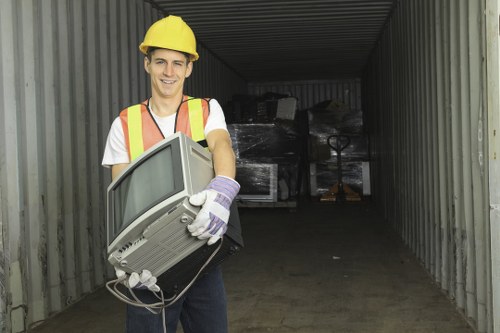
- Use of PPE such as hi-visibility clothing, gloves, boots and eye protection in designated tasks.
- Site-specific traffic management plans to segregate pedestrians and vehicles.
- Clear procedures for handling hazardous or unknown wastes, including immediate isolation and specialist disposal if needed.
All waste handling is carried out with due regard to environmental protection and public safety. Spill kits and cleanup equipment are available on vehicles and depots. Employees are trained to respond to incidental releases to prevent contamination of land or waterways and to follow reporting requirements for significant incidents.
 Roles and responsibilities are defined as follows: senior management provides leadership and resources to implement this policy; supervisors ensure day-to-day compliance and competency validation; operatives follow procedures and report hazards; and safety representatives act as a liaison to promote continuous improvement. Regular management reviews evaluate the effectiveness of the health and safety arrangements and identify opportunities for improvement.
To support performance monitoring we maintain accident and incident records, audit schedules and corrective action tracking. Periodic safety audits and toolbox talks are used to reinforce key messages and to keep staff informed of any changes to procedures or legislation relevant to the skip hire and rubbish collection industry. Continuous improvement is driven by measurable targets and the outcome of incident investigations.
In summary, Chiswick Skip Hire seeks to deliver reliable skip hire and rubbish removal services with an emphasis on safety and environmental responsibility. Compliance, training and proactive risk management are central to our approach, and every employee and contractor is expected to play their part in maintaining a safe workplace. This health and safety policy is reviewed regularly and is available to authorised stakeholders upon request.